Bill
How agencies actually get paid: the five models and when each one breaks
Agencies get paid in five ways: by the hour, by the project, by the month, by the result, or by the package. Each model moves risk between you and the client, and each one fails in a predictable place. Pick the model by asking who can best carry the uncertainty in this specific piece of work.
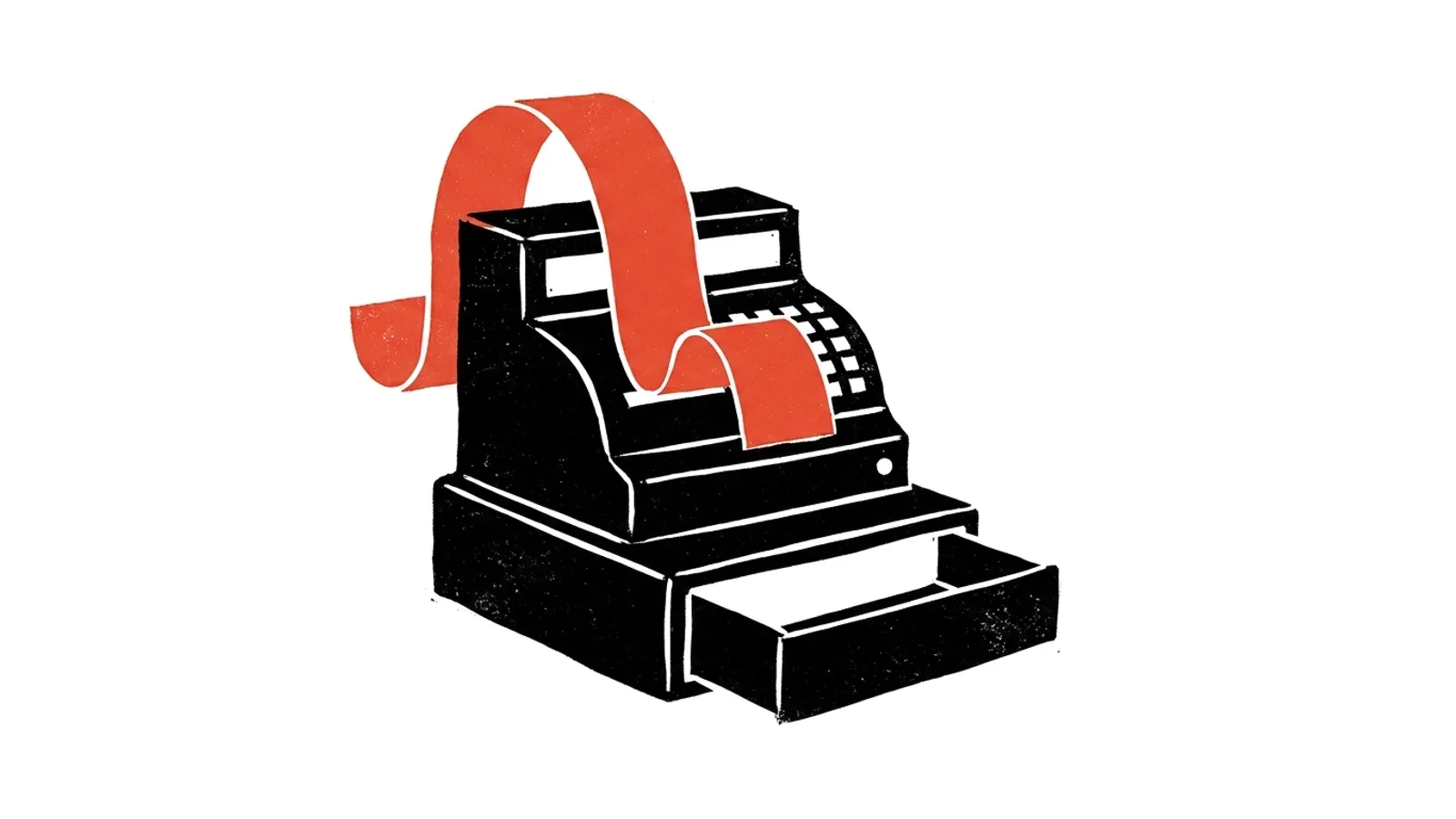
Every pricing model an agency uses is an answer to one question: when the work takes longer than anyone expected, who pays for the extra time? Hourly billing says the client pays. Fixed price says you pay. Retainers, value pricing and productized services are all variations that split the bill differently.
I have sold work under all five. Each one made money in the right conditions and lost money in the wrong ones. Every loss came from using a model past the point where it holds up.
Hourly and time and materials
You sell hours at a rate. The client carries the delivery risk, and you carry the risk of not selling enough hours. It is the safest model per project and the most limiting per year, because your revenue is capped at headcount times hours times rate.
The whole model rests on two numbers most owners track loosely. The first is billable hours: how many hours a year each person can realistically invoice once holidays, sales calls and internal work come out. The second is your utilization rate, which tells you how much of the capacity you pay for ends up on an invoice. An agency with eight people billing 1,400 hours each at $140 has a ceiling of $1,568,000. To earn more you raise the rate, raise the hours, or hire.
Hourly breaks in two places. It breaks when the client starts auditing timesheets line by line, which means trust has gone and every invoice becomes a negotiation. And it breaks when you get faster. If a tool or a senior hire halves the time a task takes, hourly billing halves your revenue for the same result.
Fixed price
You sell a defined outcome for a defined fee. You carry the delivery risk, so the price has to include a premium for carrying it. Done well, fixed price pays better than hourly because you keep the gain when you finish early.
Fixed price breaks when the scope is soft. A vague requirement on a fixed fee is an unlimited obligation at a limited price. The cure is a tight scope document, a written change process, and the discipline to price contingency honestly. I walk through the decision, with a calculator and a scoring sheet, in fixed price vs time and materials. If you already suspect scope is leaking on your fixed-fee work, start with the pillar on scope creep.
Retainers
You sell a recurring monthly commitment: a block of hours, a share of a team, or a standing set of deliverables. The client gets priority and predictability. You get revenue you can plan around, which is worth more than most owners price it at.
Retainers break quietly. The client uses 75 hours on a 60-hour plan and nobody sends the overage invoice. Or the client uses 20 hours for three months, notices, and cancels. Both failures come from the same gap: no agreed rule for what happens when usage and fee drift apart. The pillar on retainer pricing covers how to set the fee, the discount, the rollover rule and the overage rate, with a calculator that shows the point where the client should move to a project instead.
Value-based pricing
You price against what the result is worth to the client, with your cost as a floor. When it works, it produces the best margins in the business. A project that costs you $45,000 to deliver and recovers $400,000 a year for the client can reasonably sell for $80,000.
It works far less often than conference talks suggest. It needs a measurable result, a buyer who owns that number, and a reason the client cannot get the same result from the next firm at an hourly rate. Without those three, what agencies call value pricing is a fixed price with a better story attached. My honest assessment is in value-based pricing.
Productized services
You sell one fixed scope at one fixed price through one fixed process, over and over. No proposals, no custom estimates. The margin comes from repetition: the tenth delivery of the same audit takes half the hours of the first.
Productized work breaks at the first exception you accept. Each “can you also” turns the product back into a custom project at a product price. It also breaks when you have a product and no steady demand for it, because the model needs volume to pay for the standardization. The operations and the margin math are in productized services.
Choosing between them
One thing has changed under all five models: an hour of a good team’s time now produces more than it did, so a quote built on hours hands that gain to the client. Why, and what to price instead, is in agency pricing after AI.
Most agencies run a mix of models, and the mix is the strategy. The useful comparison is side by side: what the client buys, who carries the risk, where the margin ceiling sits and what kind of client each model suits. That table is in agency pricing models.
A rough rule I use:
| The work is | Use |
|---|---|
| New to you, or the requirements are still moving | Time and materials, or a fixed-price discovery phase |
| Familiar, well specified, with a decisive client | Fixed price with contingency |
| Ongoing, variable, and the client wants priority | Retainer |
| Tied to a number the buyer owns and can measure | Value-based |
| The same job for the tenth time | Productized |
The number underneath every model
All five models sit on top of the same cost base. Whatever you call the fee, you are paying people for roughly 2,080 hours a year and recovering that cost through some smaller number of sold hours.
So the first job is knowing your floor: the rate below which a full year of work loses money. I show that calculation for a solo consultant and for a small firm in how to price consulting services. Once you know the floor, every model becomes a question of how far above it you can sell, and how much risk you take on to get there.
The second job is measuring what you really collect. The rate on your rate card and the rate you realize after discounts, overruns and write-offs are different numbers, and the gap between them is usually where the year’s profit went. You cannot see that gap without honest time data, even on fixed-price work where the client never sees a timesheet.
The third job is putting the model in writing. The fee structure belongs in the contract, with the scope beside it: a statement of work for projects, a retainer agreement for monthly work.
Start with the two pillars. Read billable hours to find your real capacity and required rate, then retainer pricing to turn part of that capacity into revenue you can count on.
Everything in Bill
- Billable hours: how many you really have, and the rate they need to earn Calculator
What counts as a billable hour, how many a person can bill in a year, and how to work out the rate those hours must earn to hit your target margin.
- Retainer pricing: how to set the fee, the discount and the overage rate Calculator
How to price a monthly retainer: hours times rate, the commitment discount, rollover and overage rules, and when a client should move to a project.
- Agency pricing after AI: stop comparing hours to hours
When AI makes your team faster, hourly billing hands the gain to the client. How to price the result, answer the AI-discount question, and reprice old clients.
- Agency pricing models compared: hourly, fixed, retainer, value and productized
The five agency pricing models side by side: what the client buys, who carries the risk, the margin ceiling, and which kind of agency each one suits.
- Fixed price vs time and materials: how to choose, with a decision sheet Template Calculator
Fixed price or time and materials? The break-even math, a calculator for the fixed fee, and a one-page decision sheet you can score before you quote.
- How to price consulting services: from cost floor to market rate to value
Price consulting in three steps: the cost-plus floor, the market rate, and the value ceiling. Worked rate math for a solo consultant and a five-person firm.
- Productized services: what it takes to run one, the margin math, and why most fail
What a productized service needs operationally, the margin math against custom work, and the five ways agencies turn a product back into a project.
- Utilization rate: the formula, sane targets by role, and why 100% is a warning
How to calculate utilization rate, a worked example for a seven-person agency, realistic targets by role, and what very high utilization really tells you.
- Value-based pricing for agencies: when it works and when it is fixed price with a story
An honest look at value-based pricing for agencies and consultants: the three conditions it needs, the math, and how to tell it from fixed price.






Common questions
- What is the most profitable pricing model for an agency?
- The one that matches the uncertainty in the work. Fixed price and productized work pay best when you have done the same job many times and can estimate it tightly. Time and materials protects your margin when the scope is unknown. Most healthy agencies run two or three models side by side.
- Should a small agency charge hourly or fixed price?
- Charge fixed price for work you have delivered at least three times and can describe in a short scope document. Charge hourly, or sell a fixed-price discovery phase first, for anything new. A wrong fixed price on unfamiliar work can erase the profit from several good projects.
- Can I use more than one pricing model with the same client?
- Yes, and you usually should. A common pattern is a fixed-price build under a statement of work, followed by a monthly retainer for support and small changes, with hourly billing for anything outside both. Keep each one in its own document so nobody confuses what the fee covers.
- How often should an agency raise its rates?
- Review rates once a year and write the review into your contracts. New clients get the new rate immediately. Existing clients get written notice, typically 60 days, and an increase that at least covers your own cost growth.